
Vehicle Towing Basics: The Complete Guide to Safe and Confident Towing (2026)
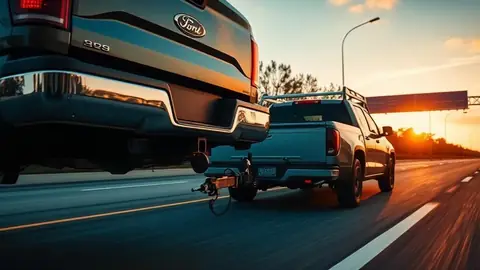
Whether you're towing a small utility trailer, camper, boat, or work equipment, understanding your vehicle's towing capabilities is essential for both safety and performance.
Many buyers focus only on the advertised towing capacity, but that number is only one part of the equation.
The actual amount your vehicle can safely tow depends on its exact configuration, passengers, cargo, hitch equipment, trailer setup, and several important weight ratings.
This guide explains the basics of towing and what you should verify before connecting any trailer.
Start With the Exact Vehicle Configuration
One of the biggest misconceptions about towing is assuming every vehicle of the same model has the same towing capacity.
In reality, towing limits can vary based on:
- Engine
- Transmission
- Drivetrain
- Axle ratio
- Cab configuration
- Bed length (for trucks)
- Factory towing package
- Suspension
- Cooling equipment
Because of these differences, always verify towing specifications using the exact Vehicle Identification Number (VIN) and the manufacturer's published information for your specific vehicle.
Understand Towing Capacity
Towing capacity is the maximum trailer weight a properly equipped vehicle is designed to pull under manufacturer specifications.
However, reaching that maximum assumes the vehicle is configured correctly and that all other weight limits remain within specification.
The advertised towing number should never be treated as the only limit.
The Real Load Includes More Than the Trailer
Many drivers only think about the trailer's empty weight.
Your actual towing load also includes:
- Passengers
- Luggage
- Camping gear
- Tools
- Cargo carried inside the tow vehicle
- Hitch equipment
- Trailer cargo
- Trailer tongue weight
Every pound added to the vehicle affects its overall capacity.
What Is Payload?
Payload refers to the amount of weight your vehicle can safely carry inside or on the vehicle itself.
Payload generally includes:
- Driver
- Passengers
- Cargo
- Hitch equipment
- Trailer tongue weight
- Accessories
Many buyers are surprised to learn that payload often becomes the limiting factor before reaching the advertised towing capacity.
Understanding Tongue Weight
Tongue weight is the downward force the trailer places on the hitch.
This weight becomes part of your vehicle's payload.
Proper tongue weight contributes to:
- Better trailer stability
- Improved steering control
- Safer braking
- Reduced trailer sway
Too little or too much tongue weight can negatively affect towing performance.
Always follow the manufacturer's recommendations for your vehicle and trailer combination.
Payload Can Limit Towing Before Tow Rating Does
Imagine this situation:
Your vehicle has:
- Four passengers
- Luggage
- Camping equipment
- A heavy hitch
- A fully loaded trailer
Even if the trailer weighs less than the advertised towing capacity, your vehicle's payload rating may already be exceeded.
This is why payload should always be evaluated alongside towing capacity.
| Rating | What It Covers | Why It Matters |
|---|---|---|
| Towing capacity | Maximum trailer weight the vehicle is designed to pull | Sets the headline limit, but assumes correct configuration |
| Payload | Driver, passengers, cargo, hitch equipment, and tongue weight | Often the real limiting factor before the tow rating |
| Tongue weight | Downward force the trailer places on the hitch | Affects stability, steering, braking, and counts toward payload |
| Axle ratings | Maximum weight each axle can support | Can be exceeded even when total weight looks acceptable |
Axle Ratings Matter
Another important specification is the vehicle's axle weight ratings.
Both the front and rear axles are designed to support a maximum amount of weight.
Excessive cargo, passengers, or trailer tongue weight may overload an axle even when the overall vehicle weight appears acceptable.
Review manufacturer specifications before towing heavy loads.
Hitch Equipment Should Not Be Overlooked
The hitch itself also has weight limits.
Verify that your receiver hitch, ball mount, hitch ball, safety chains, and electrical connector are properly matched to the trailer and rated for the intended load.
- Receiver hitch
- Ball mount
- Hitch ball
- Safety chains
- Electrical connector
Using improperly rated equipment can reduce towing safety.
Trailer Brakes
Larger trailers often require their own braking systems.
Depending on the trailer and applicable regulations, your setup may include:
- Electric trailer brakes
- Hydraulic surge brakes
- Brake controller
Properly functioning trailer brakes help improve stopping performance and reduce stress on the tow vehicle.
Always follow manufacturer recommendations and local requirements.
Tires Matter More Than Many People Realize
Inspect both the tow vehicle and trailer tires before every trip.
Check:
- Tire pressure
- Tread depth
- Tire condition
- Tire age
- Load rating
Underinflated or overloaded tires are among the most common contributors to towing-related problems.
Perform a Pre-Tow Inspection
Before every trip, inspect:
Tow Vehicle
- Engine oil
- Coolant
- Brake fluid
- Transmission fluid (if applicable)
- Battery
- Lights
- Mirrors
- Tire pressure
Trailer
- Tire pressure
- Lug nuts
- Lights
- Brake operation
- Safety chains
- Hitch connection
- Electrical wiring
- Cargo security
A few minutes of preparation can help prevent problems once you're on the road.
Drive Differently While Towing
Towing changes how a vehicle behaves.
Allow additional time and distance for:
- Acceleration
- Braking
- Lane changes
- Turning
- Merging
- Parking
Drive at appropriate speeds and leave extra following distance to improve safety.
Common Towing Mistakes
Avoid these common mistakes:
- Assuming every trim level has the same towing capacity
- Ignoring payload limits
- Forgetting trailer tongue weight
- Overloading passengers and cargo
- Exceeding axle ratings
- Using the wrong hitch equipment
- Skipping pre-trip inspections
- Not checking tire pressures
- Relying only on the advertised tow rating
Understanding all of your vehicle's weight limits helps create a safer towing experience.
Questions to Ask Before Towing
Before connecting a trailer, ask yourself:
- Have I verified my towing capacity using the exact VIN?
- Do I know my payload rating?
- How much do my passengers and cargo weigh?
- Is my trailer properly loaded?
- Is my tongue weight within specification?
- Are my hitch components rated appropriately?
- Have I inspected both the vehicle and trailer?
- Am I comfortable driving with this load?
Frequently Asked Questions
Is the advertised towing capacity the only number I need to know?
No. The advertised towing capacity is only one specification. You should also consider payload, tongue weight, axle ratings, hitch ratings, passengers, cargo, and the trailer's loaded weight before towing.
Why should I verify towing capacity using the VIN?
Different engines, drivetrains, axle ratios, cab configurations, towing packages, and other factory options can significantly change towing capabilities. Using the exact VIN helps confirm the manufacturer's specifications for your specific vehicle.
What is payload?
Payload is the maximum amount of weight your vehicle can carry, including passengers, cargo, hitch equipment, and trailer tongue weight. In many situations, payload becomes the limiting factor before the maximum towing capacity is reached.
Does tongue weight count toward payload?
Yes. Trailer tongue weight is carried by the tow vehicle and counts as part of its payload. It should always be included when calculating your total vehicle load.
Why are axle ratings important?
Each axle has a maximum weight rating established by the manufacturer. Heavy passengers, cargo, or trailer tongue weight can overload an individual axle even if the total trailer weight appears to be within the advertised towing capacity.
Related Buying Resources
Continue learning:
Related Buying Resources
Ready to Find a Vehicle Built for Towing?
Whether you're hauling a camper, boat, utility trailer, or work equipment, choosing the right tow vehicle begins with understanding more than just the advertised towing capacity. By verifying the exact VIN specifications, evaluating payload, tongue weight, axle ratings, and total cargo, you can select a vehicle that safely handles your towing needs with confidence.
Browse our inventory of trucks, SUVs, and towing-capable vehicles, compare factory towing specifications, estimate monthly payments, and explore financing options. Our team can help you find a vehicle that fits your lifestyle—whether you're towing for work, recreation, or your next adventure.
Ready to find a vehicle built for towing?
Browse trucks, SUVs, and towing-capable vehicles, estimate your monthly payment, and explore financing options.