
How to Read a Vehicle History Report: A Complete Buyer's Guide (2026)
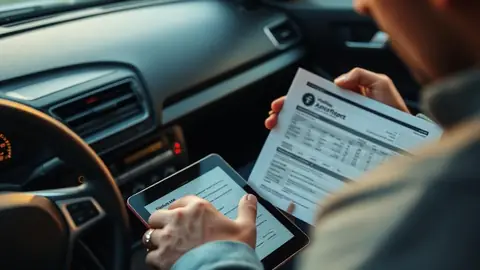
A vehicle history report is one of the most valuable tools available when shopping for a used vehicle. It provides information about a vehicle's past ownership, title history, reported accidents, mileage records, and other events that may help you make a more informed buying decision.
However, a history report is only one part of evaluating a vehicle.
Even a report that appears clean does not guarantee that a vehicle has never been damaged or repaired. Likewise, a vehicle with a reported accident isn't automatically a poor purchase if it has been properly repaired and maintained.
Understanding what a history report can—and cannot—tell you is essential before making your purchase.
What Is a Vehicle History Report?
A vehicle history report compiles information from various sources to create a timeline of a vehicle's recorded history.
Depending on the reporting service and available records, a report may include:
- Previous ownership history
- Title information
- Reported accidents
- Mileage records
- Registration history
- Service and maintenance entries
- Open recalls
- Manufacturer buyback information (when applicable)
Because reports rely on information submitted from outside sources, they should be viewed as an important research tool—not a complete record of everything that has happened to a vehicle.
Verify the Vehicle Identification Number (VIN)
Before reviewing any details, confirm that the Vehicle Identification Number (VIN) on the report matches the vehicle exactly.
Check that the VIN matches:
- Dashboard VIN plate
- Driver's door label
- Vehicle registration
- Title (when available)
Matching VINs help ensure you're reviewing the correct vehicle's history.
Review the Title History
One of the first sections to examine is the vehicle's title history.
Look for information regarding:
- Current title status
- Previous states of registration
- Ownership transfers
- Reported title brands
A title history helps establish how ownership has changed over time.
Understand Title Brands
A title brand indicates that a vehicle has received a special designation under state law.
Examples may include:
- Salvage
- Rebuilt
- Flood
- Lemon law buyback
- Junk
- Hail damage (where applicable)
Each title brand has its own meaning depending on state regulations.
If a branded title appears on the report, ask questions and fully understand the vehicle's history before making a purchase.
Review Reported Accidents
Many history reports include accidents that have been reported to participating agencies or organizations.
Review:
- Date of accident
- Reported severity (when available)
- Area of damage
- Airbag deployment information (if reported)
Remember that not every accident is reported, and not every reported accident results in significant structural damage.
The report provides useful context but should not replace a professional inspection.
Check Ownership History
Ownership history may provide additional insight into how the vehicle has been used.
Review:
- Number of previous owners
- Length of ownership
- Registration location
- Personal or commercial use (when available)
A higher number of owners doesn't automatically indicate a problem, but it can prompt additional questions during your evaluation.
Review Mileage Records
Mileage entries help establish whether the vehicle's recorded mileage appears consistent over time.
Look for:
- Regular mileage updates
- Logical mileage progression
- Unexpected decreases
- Large unexplained gaps
If mileage records appear inconsistent, ask for clarification before purchasing.
Look for Service and Maintenance Records
Some vehicle history reports include maintenance information from participating repair facilities.
Examples include:
- Oil changes
- Tire rotations
- Brake service
- Battery replacement
- Scheduled maintenance
- Recall repairs
While not every repair facility reports maintenance, available service records can help illustrate how the vehicle has been cared for.
Review Recall Information
Some reports include manufacturer recall information.
Determine:
- Whether recalls exist
- Whether recalls have been completed
- Whether additional recall work may still be required
If recalls remain open, ask the dealership or manufacturer about available repair options.
Compare the Report With the Vehicle
A vehicle history report should always be compared with the vehicle you're inspecting.
Check whether the report matches:
- Overall vehicle condition
- Paint quality
- Body panels
- Interior wear
- Tire condition
- Seller disclosures
- Maintenance documentation
If something doesn't appear consistent, ask additional questions before moving forward.
A Clean Report Doesn't Mean a Perfect Vehicle
Many buyers mistakenly assume a clean vehicle history report guarantees a trouble-free vehicle.
In reality:
- Not every accident is reported.
- Not every repair appears in the database.
- Some maintenance is performed without being reported.
- Cosmetic repairs may never appear.
A clean report is encouraging—but it should never replace a thorough inspection and test drive.
Consider a Professional Inspection
Even when a history report appears favorable, an independent pre-purchase inspection can provide valuable peace of mind.
A qualified technician can evaluate:
- Suspension
- Brakes
- Tires
- Engine
- Transmission
- Electrical systems
- Structural condition
Combining a vehicle history report with a professional inspection provides one of the most complete evaluations possible.
Common Mistakes Buyers Make
Avoid these common mistakes:
- Assuming a clean report guarantees a perfect vehicle
- Ignoring title brands
- Overlooking mileage inconsistencies
- Skipping a physical inspection
- Not reviewing maintenance records
- Forgetting to compare the report with the vehicle itself
- Ignoring seller disclosures
- Failing to ask questions about reported events
Using multiple sources of information helps you make a better-informed purchasing decision.
Questions to Ask Before Buying
Before purchasing a used vehicle, ask yourself:
- Does the VIN match all documents?
- Are there any title brands?
- Does the mileage appear consistent?
- Are reported accidents explained?
- Do service records support proper maintenance?
- Does the vehicle's condition match the report?
- Have seller disclosures been reviewed?
- Has the vehicle received a professional inspection?
Frequently Asked Questions
What does a vehicle history report show?
A vehicle history report may include title information, ownership history, reported accidents, mileage records, registration history, service entries, recall information, and other available records. The exact information depends on the reporting service and available data sources.
Does a clean history report mean the vehicle has never been in an accident?
No. Not every accident, repair, or maintenance event is reported to history reporting services. A clean report should always be combined with a careful inspection and test drive.
What is a title brand?
A title brand is a designation issued under state law that identifies certain events in a vehicle's history, such as salvage, rebuilt, flood, or manufacturer buyback. If a title brand appears, ask questions and understand what it means before purchasing.
Why should I compare the report with the vehicle?
Comparing the report to the vehicle's current condition, seller disclosures, and maintenance documentation helps identify inconsistencies that may require additional explanation.
Should I still get a pre-purchase inspection?
Yes. A professional inspection can identify mechanical or structural issues that may not appear on a vehicle history report and provides additional confidence before completing your purchase.
Related Buying Resources
Continue your research:
Related Buying Resources
Buy Your Next Vehicle with Confidence
A vehicle history report is one of the best tools available for researching a used vehicle, but it's only one piece of the buying process. By reviewing title history, ownership records, mileage, service entries, and reported accidents—and comparing those findings with a thorough inspection and seller disclosures—you'll be in a stronger position to make an informed decision.
Browse our inventory of quality pre-owned vehicles, review available vehicle history information, schedule a test drive, estimate monthly payments, and explore financing options. Our team is committed to providing transparent information so you can shop with confidence.
Buy your next vehicle with confidence
Browse quality pre-owned vehicles, estimate monthly payments, and explore financing options.